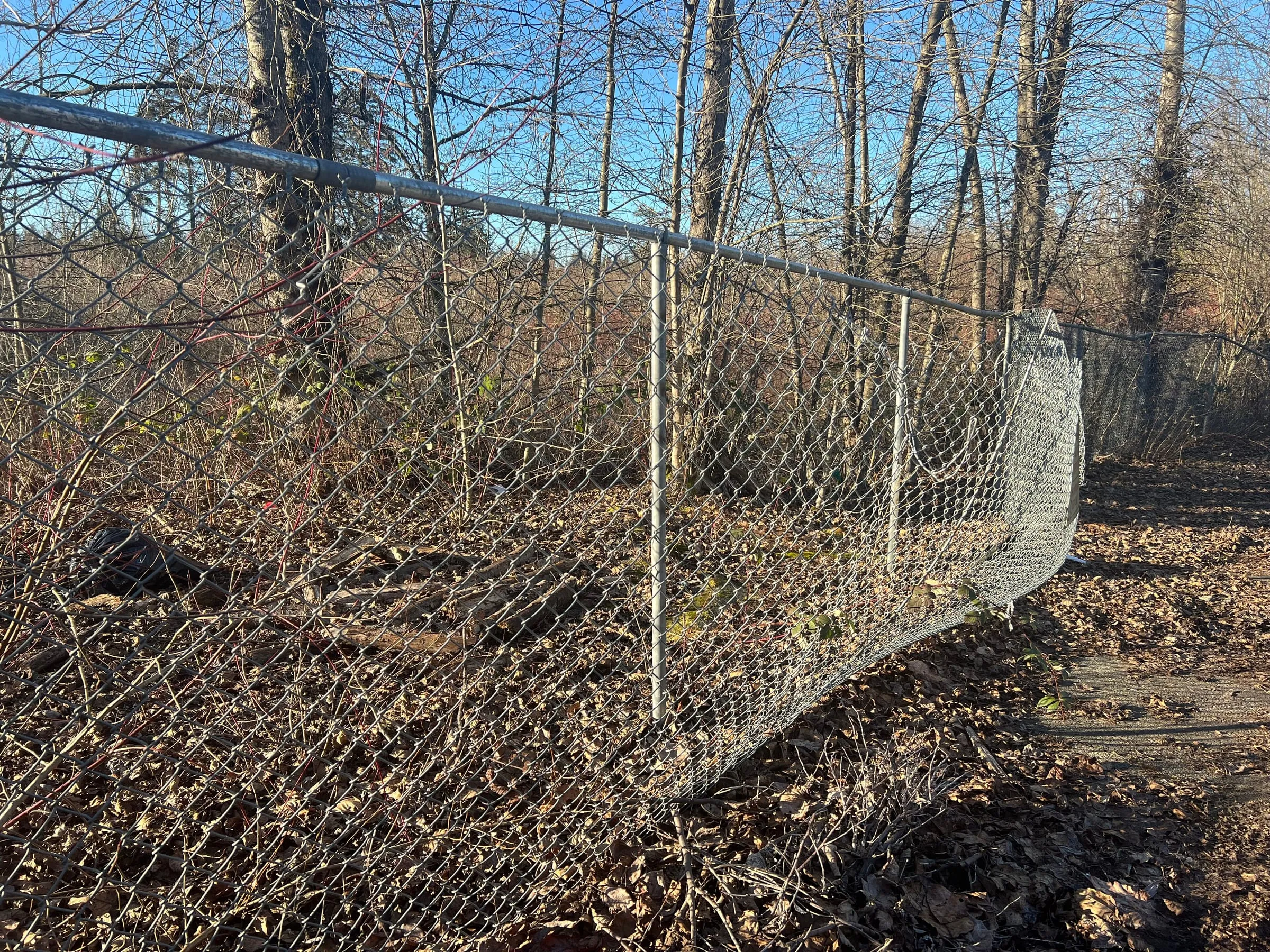
What is a chain link fence?
It’s steel wire woven into a diamond mesh and stretched between steel posts, with a rail along the top. It keeps dogs and kids in and leaves the view open.
It comes two ways:
- Galvanized. The bright silver kind: steel wire coated in zinc. It’s the lowest-cost yard fence on our price list, at $13–19 a foot installed, and cost guides put its life at 20 years or more.
- Black vinyl-coated. The same galvanized wire with a black coating over it, at $16–23 a foot. It fades into a lawn or a tree line instead of shining, and the posts and rail come in black to match.
Both are priced here at 4 ft, the usual height for a back yard or a dog run.
How do we build it?
Heavy terminal posts go at every end, corner and gate. Lighter line posts go every 10 ft between them, and the mesh is stretched tight from one terminal to the next.
Terminal and line posts. Terminal posts carry the pull of the stretched mesh, so they’re a bigger pipe than the line posts. Line posts hold the fence up and keep it straight. A run with many corners or gates has more terminals, which is part of why short, choppy runs cost more per foot.
Top rail. A continuous rail runs through the tops of the line posts and ties the whole line together. It keeps the mesh from sagging between posts.
Stretching. Tension bars and bands clamp the mesh to each terminal post, and the mesh is pulled tight before it’s tied to the line posts and rail. Loose mesh sags and gives a dog room to push under.
Slopes and clay. Chain link follows rolling ground better than a panel fence, because the mesh bends with the grade. The Upstate’s red clay subsoil makes for slow digging, and rock or roots on the line add time.
Before the first hole, we file the SC811 locate so the buried lines get marked.
What does chain link cost?
Galvanized runs $13–19 a foot installed and black vinyl-coated runs $16–23 a foot, both at 4 ft. A walk gate adds $180–400 and a drive gate $400–900.
| Example job | Ballpark |
|---|---|
| 60 ft galvanized dog run, one walk gate | $1,200–$1,550 |
| 150 ft galvanized back yard, one walk gate | $2,150–$3,250 |
| 150 ft black coated back yard, one walk gate | $2,600–$3,850 |
| 400 ft galvanized property line, one walk gate, one drive gate | $5,800–$8,900 |
Small jobs like a dog run often land on the $1,200 job minimum. Taking out an old fence adds $3–5 a foot. The Seneca fence cost guide covers the rest, and the fence measuring guide helps you get the footage before you ask for a price.
Where does chain link make sense?
Dog runs, vegetable gardens, back yards where you want to see out, and long lines where the cost per foot adds up fast.
- Dog runs. A small pen off the back door, with a walk gate close to the house.
- Gardens. It keeps dogs and kids out of the beds and lets the sun through.
- Long runs. On a property line hundreds of feet long, the per-foot gap between chain link and wood privacy is most of the job.
- Privacy slats. Slats woven into the mesh cut the view, now or later. They don’t make it a true privacy fence, but they help. Ask and we’ll price them.
Size the gates for what goes through them. A walk gate covers people and a push mower. A drive gate covers a riding mower, a truck or a trailer.
When is chain link the wrong pick?
When you want real privacy, or when the fence faces a street in a district that limits it. Seneca’s historic district guidelines say chain link isn’t appropriate in front yards.
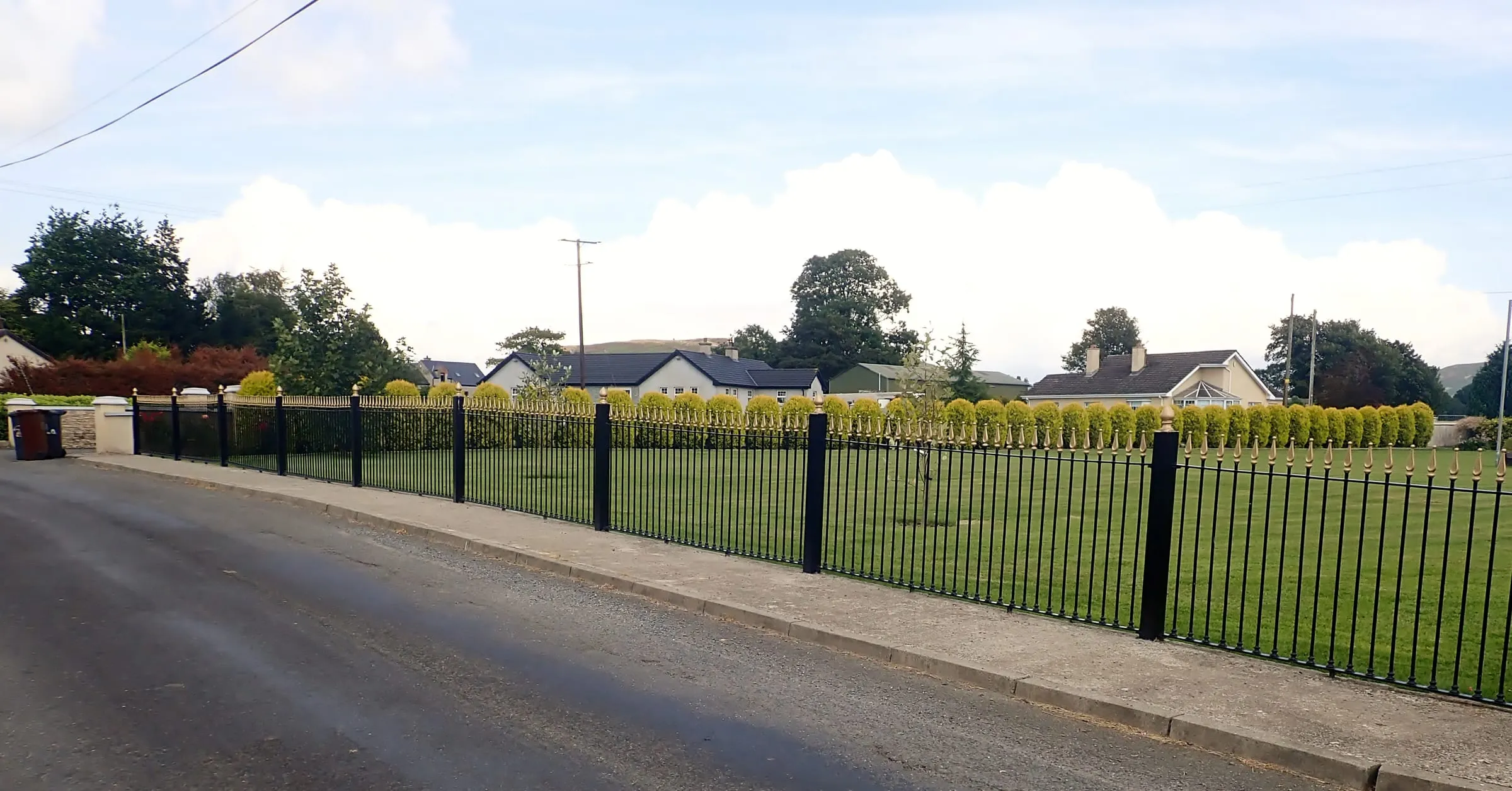
For an open look with more finish, an aluminum fence costs more and suits a front yard. For a solid screen, go with a wood privacy fence.
If you live under an HOA, read the covenants for fence type before you choose. We check the town, county, HOA and lake rules before the layout is final, and we walk the finished line with you.