What fence repairs do we do?
We replace leaning and rotted posts and broken boards, fix sagging gates, and put chain link back up after a tree comes down on it.
- Leaning or rotted posts. A new post in concrete, with the rails fastened back to it.
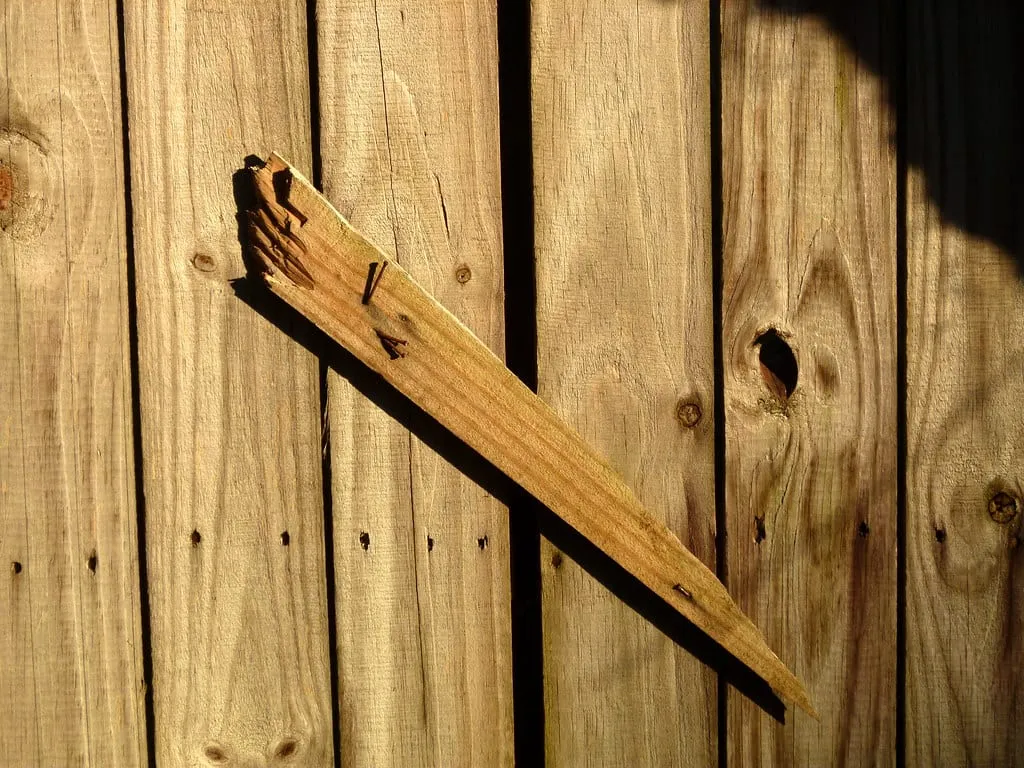
- Broken boards and rails. New pickets and rails cut in where the old ones split or fell off.
- Sagging gates. A reset hinge post, a new brace, or new hinges and latch.
- Chain link under a tree. New top rail, posts and mesh where the tree landed.
Why do fence posts lean or rot?
Pine posts rot at the base first, where wet ground meets wood, and South Carolina sits in the heaviest termite zone. Once a post weakens, wind against a solid fence pushes it over.
Pressure-treated pine lasts about 10 to 20 years in a hot, humid climate, and the post is usually what goes first. Walhalla’s normal rainfall is about 61 inches a year, and the state is in HUD termite zone 1, rated very heavy. A 6 ft privacy fence catches wind like a sail, so one soft post leans the whole section with it.
The fix is a new post. The rails come off, the old post and its concrete come out, and a new ground-contact post goes in concrete before the rails go back on. Before we dig, we file the SC811 locate. If several posts in a row are soft, check the rest; the wood fence lifespan guide covers what to look for.
Can a sagging gate be fixed?
Usually. A gate sags when its hinge post leans or its frame pulls out of square, and the fix is a reset post, a new brace, or new hinges and a latch.
A gate that drags on the ground or misses its latch is the early sign. Catch it then and it’s often a brace and an adjustment. If the frame itself has rotted, a new gate is the better buy. A new wood walk gate runs $300–550 installed, and a chain link walk gate $180–400.
What about storm and tree damage?
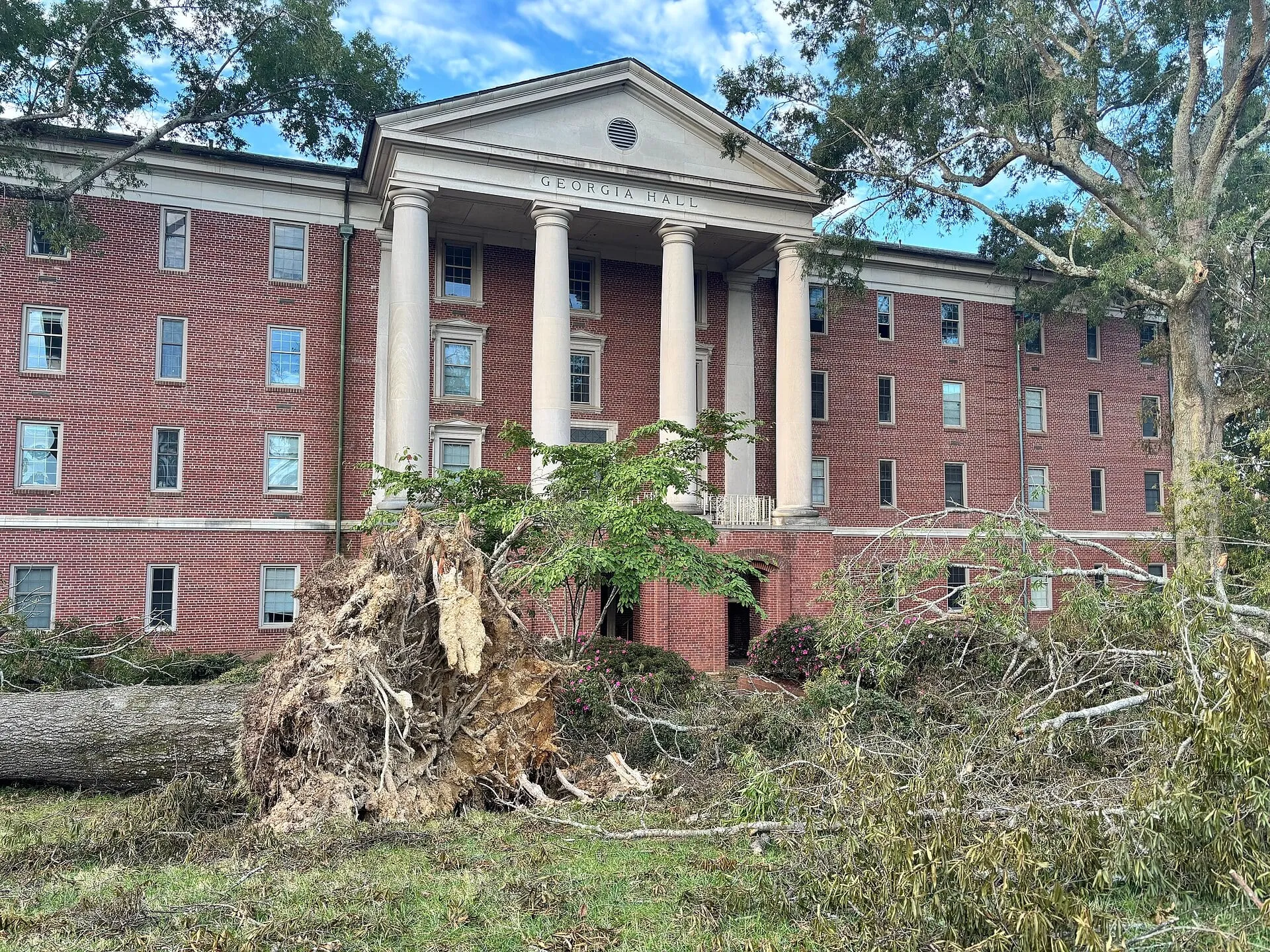
Storms like Hurricane Helene in 2024 put trees on fences across the Upstate. Damage from a fallen tree is often confined to one stretch, so it can be repaired in sections.
- Get the tree off first. A tree service handles a big trunk. We take it from there.
- Chain link. A tree on chain link usually bends the top rail and a post or two and tears the mesh. Those parts get replaced, and the rest of the line can stay. The chain link fence page covers how the line is built.
- Wood. A falling limb snaps pickets and rails and can crack a post at the ground. Cracked posts get replaced, not patched.
- Photos. If you plan an insurance claim, take photos before anything is moved.
Should you repair or replace?
Repair when the damage is in one place and the rest of the fence is sound. Replace when posts are going soft all along the line, or the fence is near the end of its life.
A rough way to decide:
| What you see | Usually |
|---|---|
| One or two bad posts, a few broken boards | Repair |
| A gate that drags or won’t latch | Repair |
| A section under a fallen tree, the rest sound | Repair |
| Soft or leaning posts in several places | Price both |
| A pine fence past 15 years, boards splitting along the run | Replace |
If you replace, taking down and hauling off the old fence adds $3–5 a foot. The wood privacy fence page covers what a new one involves. If the fence sits on a line you share with a neighbor, the property line fence guide is worth a read first.
How do I get a repair price?
Text us two photos: one wide shot of the whole damaged run and one close-up of the worst spot. Add your town and about how many feet or posts are involved.
Use the number on this page, or send the same details through the quote form. Tell us what kind of fence it is, about how old it is, and whether a gate is involved. When the work is done, we walk the finished line with you.