What farm fences do we build?
Three- and four-board wood fence for horses and road frontage, and 4 ft woven wire field fence for pasture and mixed stock. Board runs $12–22 a foot installed and field fence $5–10 a foot.
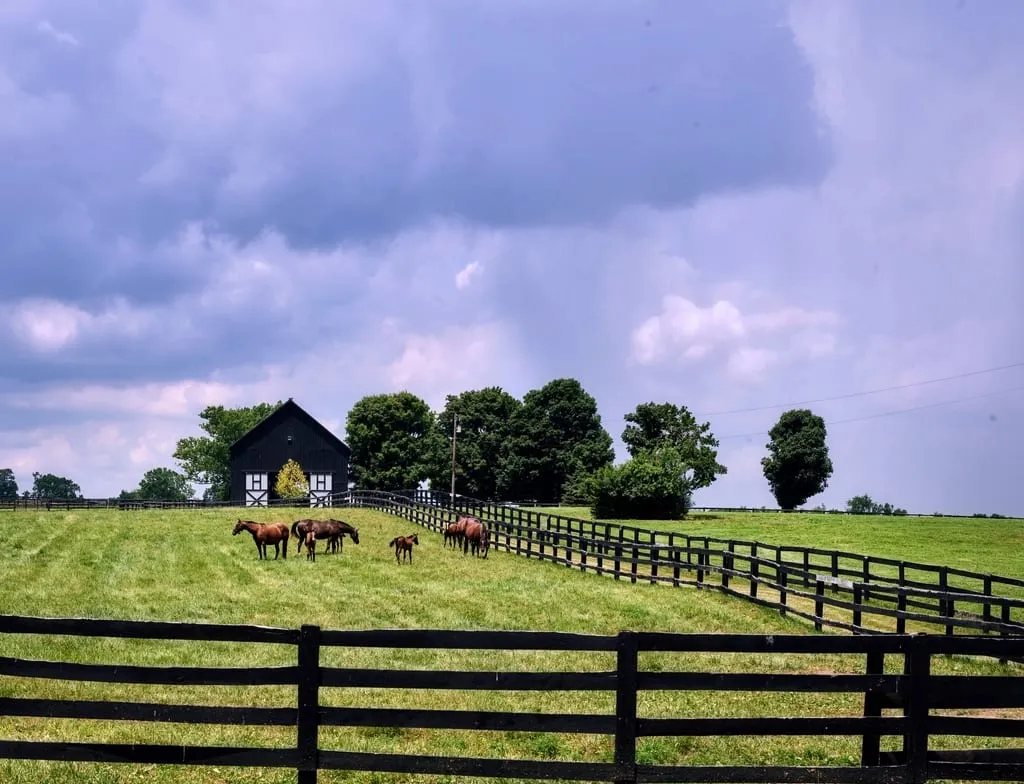
Board fence. Three or four horizontal boards on wood posts, 4 to 5 ft tall, with a post every 8 ft. Three boards suit grown horses on open pasture. Four boards close the gaps lower down, for foals, ponies and smaller stock.
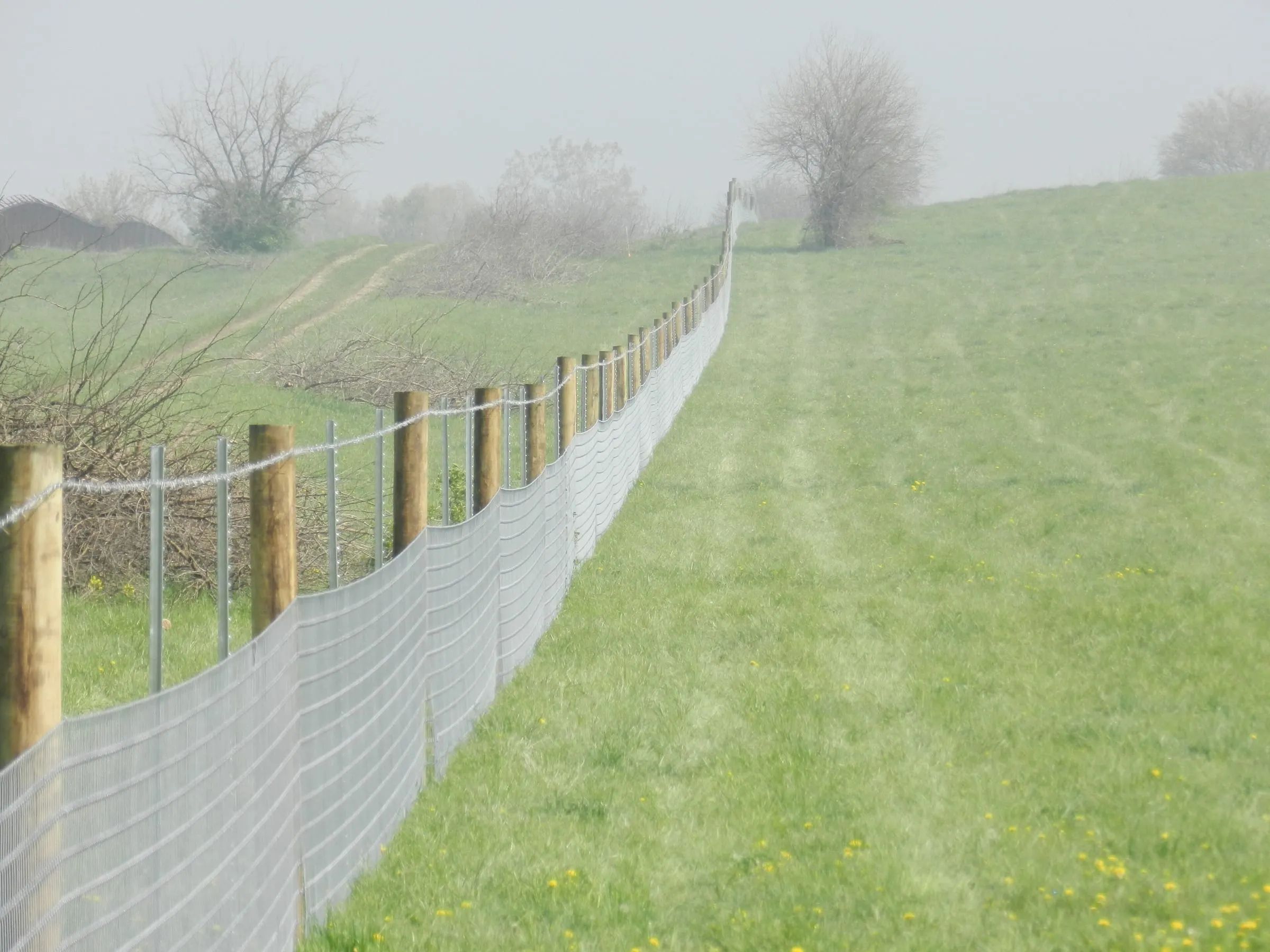
Woven wire field fence. Wire woven into a grid with smaller openings near the ground, 4 ft tall. It goes up on a mix of wood posts and steel T-posts, with a line post every 10 ft and wood at every corner, end and gate. It holds goats, sheep, dogs and calves that would walk between boards.
Why do corners need H-braces?
Stretched wire and long board runs pull on their end posts all the time. An H-brace, two posts joined by a cross rail with a tight diagonal wire, keeps a corner or gate post from leaning in.
Every corner, end and gate opening gets one. On woven wire, the braces are what let the wire be stretched tight. A fence without them loosens and sags, and the wire starts to bow between posts.
Long straight runs get braces partway along too, so no single stretch of wire is too long to keep tight. Bracing is also why a field with many corners costs more per foot than one long, straight line.
Gates hang on braced posts for the same reason. A farm walk gate runs $250–450 installed and a drive gate $400–750. Size the drive gate for the widest thing that has to pass, whether that’s a tractor with a bush hog or a hay trailer.
What about rocky ground and long runs?
Rock and roots slow the digging and add cost. Cost guides put the add-on for rock, clay and roots at 15 to 40 percent; long, open runs with good access go fastest.
Oconee’s uplands sit on Cecil series soil: very deep, well drained, with a red clay subsoil. Farm lines also tend to cross rock, stumps and wet spots that a back yard never has. Walk the line before you ask for a price, and mark the corners, gates and anything the crew will have to work around. The fence measuring guide covers long runs.
If the fence follows a boundary, know where the line is. National cost guides put a boundary survey at roughly $200 to $1,000, and the property line fence guide covers the rest.
What does farm fence cost?
Board fence runs $12–22 a foot installed, and woven wire field fence $5–10 a foot. Gates, corners and rough ground move the total.
| Example job | Ballpark |
|---|---|
| 300 ft of board along the road, one drive gate | $4,000–$7,350 |
| 800 ft of board paddock, one walk gate, one drive gate | $10,250–$18,800 |
| 1,000 ft of woven wire pasture, one drive gate | $5,400–$10,750 |
| 2,500 ft of woven wire, two drive gates | $13,300–$26,500 |
On acreage a few dollars a foot adds up, so board often goes where it shows and wire goes around the back pasture. Taking out old wire and posts adds $3–5 a foot. The Seneca fence cost guide covers the other price drivers.
What rules apply on rural land?
In Oconee County’s Control Free District, zoning doesn’t regulate how land is used, but overlay districts still apply. Lake shorelines have their own rules on top of that.
- Control Free District. It’s exempt from county zoning, but overlays such as the lake overlay still apply. For a specific parcel, call Oconee County Planning & Zoning at 864-638-4218. The fence permits guide covers the rest of the county.
- Lake Keowee. Duke’s shoreline guidelines don’t approve fences inside the Project Boundary, except as needed to confine livestock watering to a small area of the shoreline. Pens and kennels aren’t approved there either. The Lake Keowee fence page covers the boundary and the county buffer.
- Lake Hartwell. The land around the lake past the property line is public. Putting a fence or pen on it without a permit counts as trespass or encroachment.
We check the county and lake rules before the layout is final, and we walk the finished line with you.