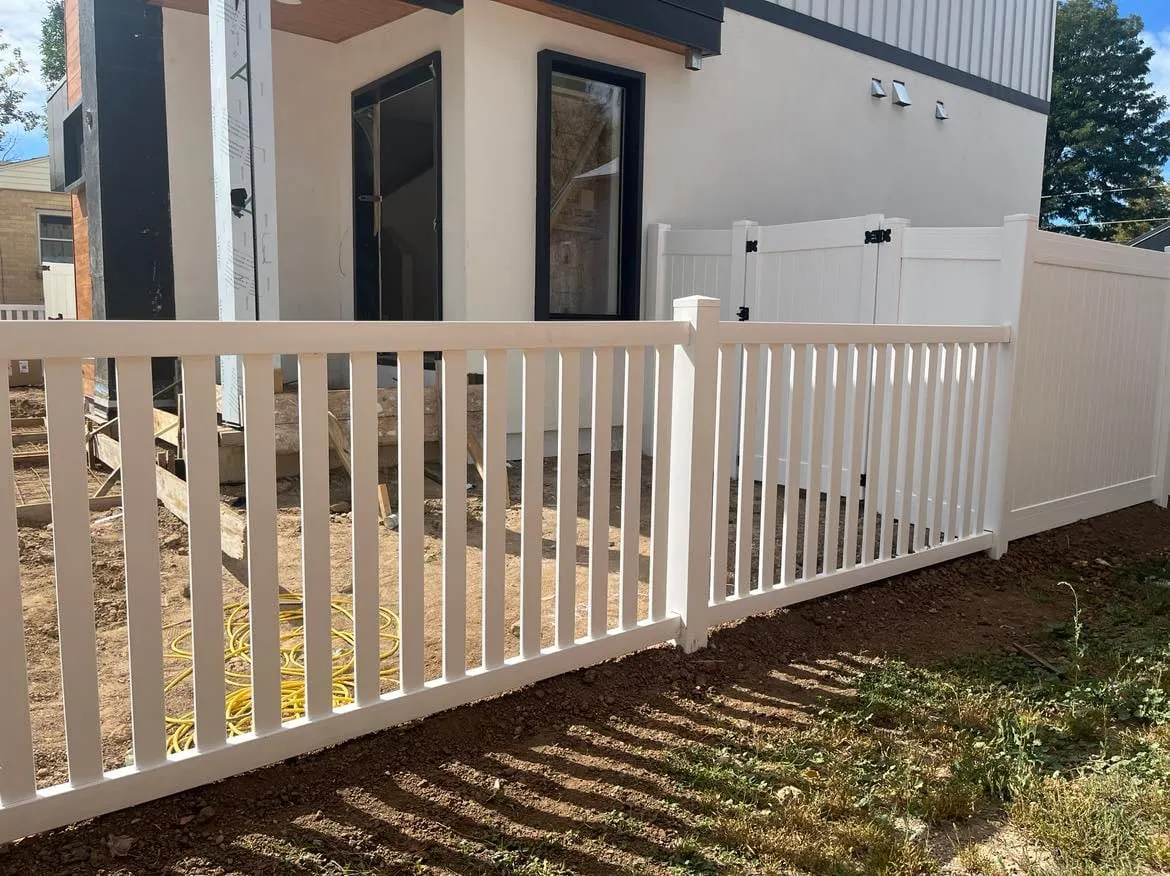
Which is best: wood, vinyl or aluminum?
Wood costs the least to build, vinyl gives privacy with the least upkeep, and aluminum lasts the longest and suits pools and open front yards. The right one depends on what the fence is for.
| Wood (pressure-treated pine) | Vinyl | Aluminum | |
|---|---|---|---|
| Installed price | $22–34 a foot at 6 ft | $30–44 a foot at 6 ft | $30–42 a foot at 4 ft |
| Walk gate | $300–550 | $350–700 | $350–700 |
| Life in heat and humidity | 10–20 years | 20–30+ years | 20–50 years |
| Upkeep | Stain or seal, replace boards | Wash | Wash |
| Privacy | Full | Full | None, open pickets |
| Termites | Can eat it | Won’t eat it | Won’t eat it |
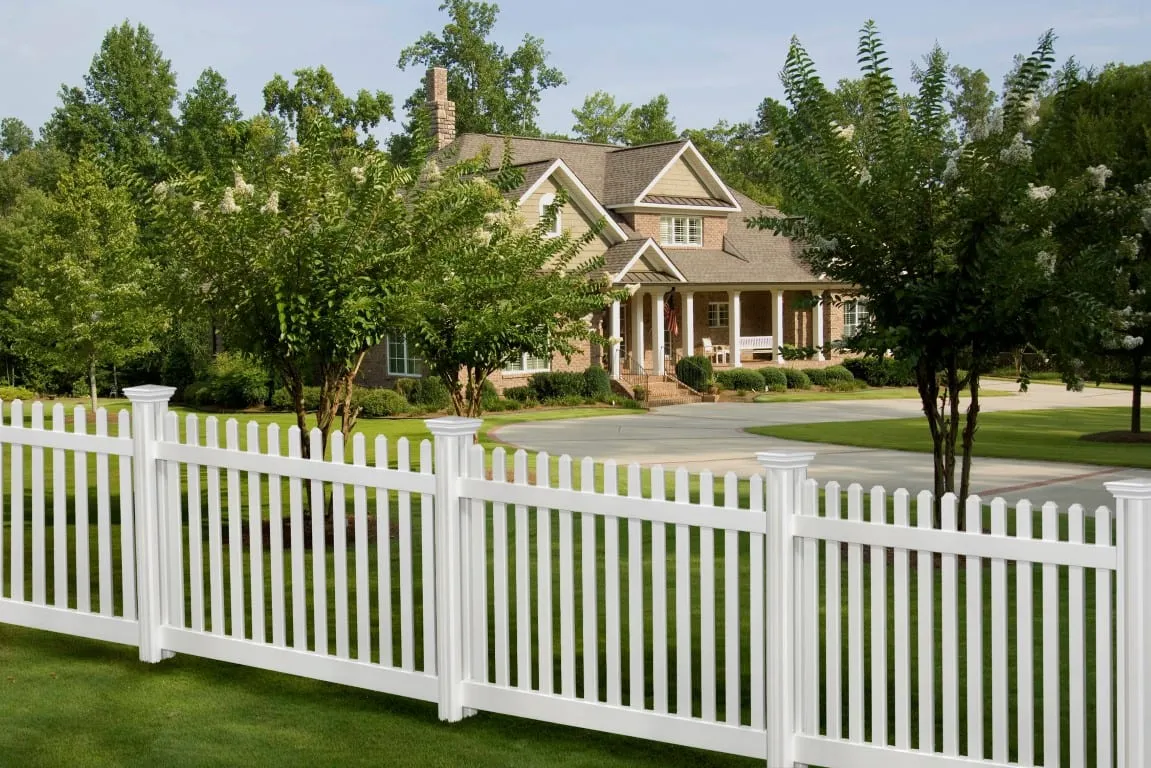
| Best for | Privacy on a budget | Privacy with little upkeep | Pools, front yards, views |
Which costs least to build?
Pressure-treated pine. A 6 ft wood privacy fence runs $22–34 a foot, against $30–44 a foot for 6 ft vinyl privacy and $30–42 a foot for 4 ft aluminum.
Keep the heights in mind when you compare. Aluminum is priced here at 4 ft because it is an open fence, and the 5 ft pool style runs $36–50 a foot. Gates add to every one: a wood walk gate runs $300–550, and a vinyl or aluminum walk gate runs $350–700. For a whole yard with gates, what a fence costs in Seneca works through real examples.
Which lasts longest in our climate?
Aluminum, then vinyl, then wood. Cost guides for hot, humid climates put aluminum at 20 to 50 years, vinyl at 20 to 30 or more, cedar at 15 to 30 and pressure-treated pine at 10 to 20.
The climate here is hard on wood. Walhalla averages about 61 inches of rain a year, by SC DNR’s 1991–2020 normals. HUD’s termite map puts all of South Carolina in Zone 1, “very heavy.” Wood posts rot at the base first, where they stay damp longest. Vinyl and aluminum don’t rot, and termites don’t eat them. How long a wood fence lasts here goes into posts, clay and stain.
How much upkeep does each need?
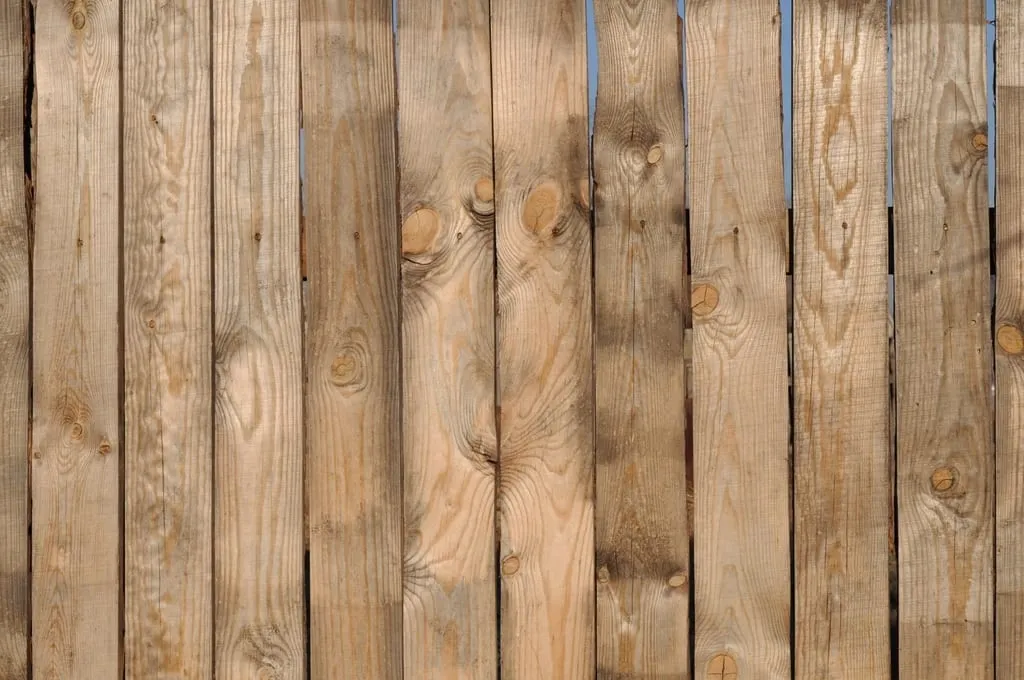
Wood needs the most: stain or sealer to slow the weathering, and the odd board or post replaced. Vinyl and aluminum mostly need a wash now and then.
With wood, the work is regular but simple. Recoat when water stops beading on the boards, keep soil and mulch off the bottom, and fix a loose board before the next storm pulls it further. Vinyl can pick up dirt and mildew in shady, damp spots, and soap, water and a soft brush clean it. Aluminum asks the least of the three.
Which gives the most privacy?
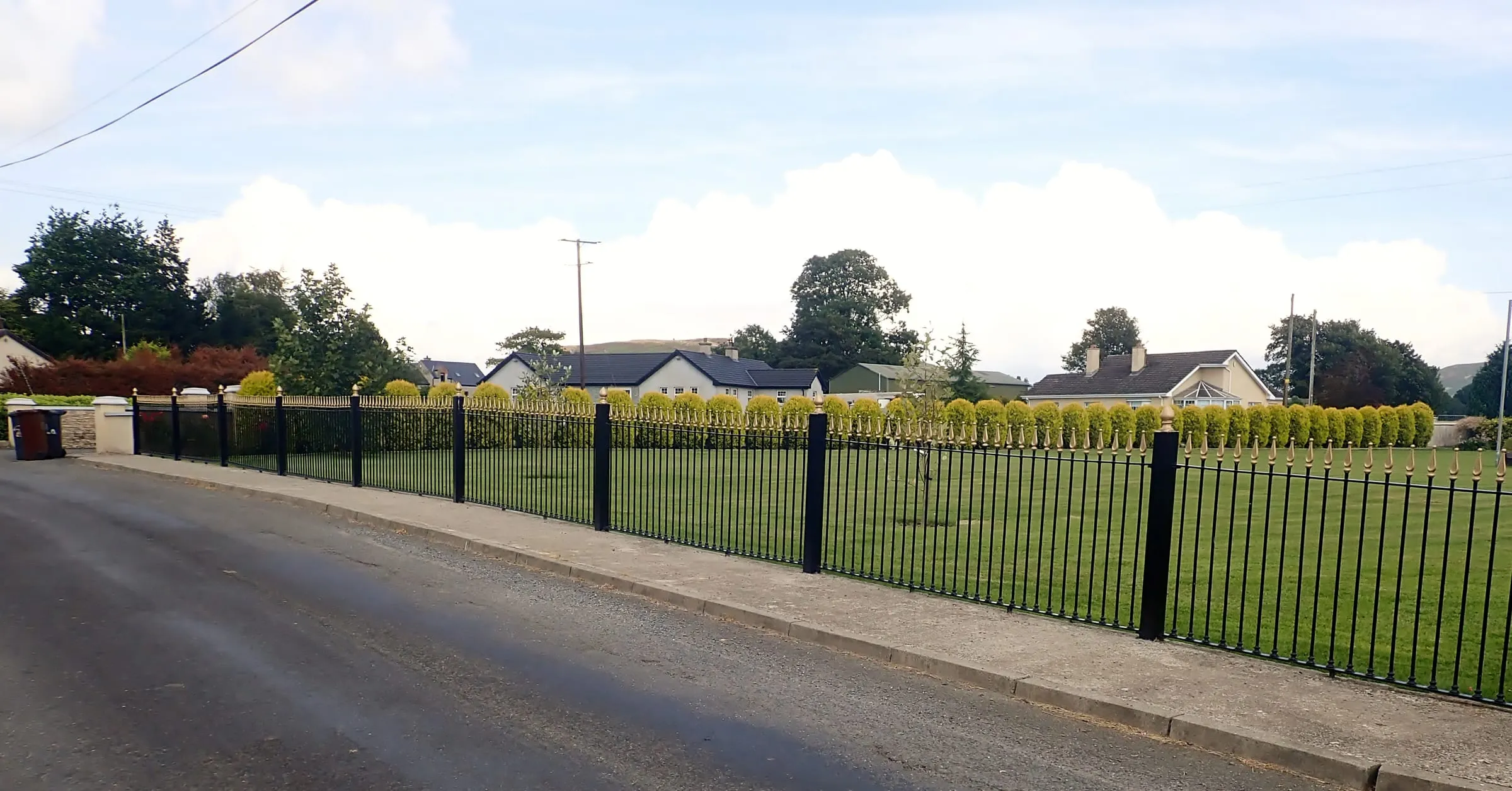
Wood and vinyl privacy fences, both priced here at 6 ft, block the view. Aluminum doesn’t: it is an open picket fence you see straight through.
Where the fence goes can decide it for you. City of Clemson zoning, Sec. 19-305 C.11, caps a front-setback fence at 4 ft and requires it to be “visually transparent,” which rules out a solid privacy fence out front. In Seneca’s Historic Design Review District, the guidelines keep privacy fences to side and rear yards and set picket fences at 24 to 48 in. A privacy fence in back with a low, open fence out front works under both.
Which works best on a slope?
Aluminum panels can usually be racked to follow the ground. Wood privacy is usually stepped, each section level and dropping at the post, and vinyl depends on the panel.
Either way, a slope adds cost. Cost guides add about 10 percent for a slight slope, 25 percent for a moderate one and up to 50 percent for a steep, stepped line. Tick the slope box in the estimator and the range widens to cover it. If the look of a stepped top bothers you, ask to see the panel you like on a slope before you choose it.
Which suits a pool or an HOA?
For a pool, aluminum: a 5 ft aluminum pool fence runs $36–50 a foot, with self-closing, self-latching gates at $550–1,000. For an HOA, read the covenants before you choose a material.
South Carolina enforces the 2021 pool code statewide. A pool barrier must be at least 48 in high, with no opening a 4-inch sphere can pass and gates that open outward and close and latch on their own. The pool fence rules for South Carolina cover the details, and our aluminum fence page covers the fence itself.
HOAs vary. Keowee Key’s covenants, for one, need its review committee to approve any fence, hedge or wall on a property line. Get approval in writing before materials are ordered.
When does chain link beat all three?
When the fence just has to keep a dog in or mark a long line on a budget. Galvanized chain link runs $13–19 a foot at 4 ft and lasts 20 years or more.
Black coated chain link, at $16–23 a foot, fades into trees and lawn better than bare galvanized. It isn’t private and it isn’t pretty, so it suits back yards, dog runs and side lines more than the front of the house. In Seneca’s Historic Design Review District, chain link is not appropriate in front yards. Our chain link fence page has the details.